How To Tell If a Tire Can Be Repaired or Needs Replacing
June 30, 2026
A flat tire does not always mean you need a new tire. Sometimes a small puncture can be repaired safely, allowing the tire to return to service. Other times, the damage is in the wrong place, too large, or too risky to trust again.
The tricky part is that two tires can look similar from the outside but need completely different answers. A nail in the center tread is not the same as a cut in the sidewall. A slow leak is not the same as a tire that was driven flat. The repair decision depends on where the damage is, how severe it is, and the tire's condition before the problem started.
Damage In The Tread Area May Be Repairable
The most common tire damage occurs in the main tread area. If a nail, screw, or small sharp object punctures the tire straight through the tread, and the hole is not too large, the tire may be a good repair candidate.
That does not mean every tread puncture is safe to fix. The tire has to be removed from the wheel so the inside can be checked. A puncture may look small outside but show tearing, separation, or internal damage inside. A safe repair should seal the puncture path and restore the inner liner, not only stop the air from leaking for a few days.
A simple outside plug may seem convenient, but it does not show what happened inside the tire. That is why a proper repair should include an internal inspection before the tire is put back on the vehicle.
Sidewall Damage Usually Means Replacement
Sidewall damage is a different story. The sidewall flexes constantly as the tire rolls, turns, and carries vehicle weight. A puncture, cut, bubble, or crack in that area usually cannot be repaired safely.
The shoulder area, where the tread curves down into the sidewall, is also a problem area. Even if the damage looks close to the tread, that part of the tire moves too much for a reliable repair. A patch or plug-in in that area may not hold up under heat, speed, and flexing.
Sidewall bubbles are especially serious. A bubble usually means the tire’s internal structure has been damaged. The tire may still hold air, but it is weakened. Replacement is the safer choice.
The Size Of The Puncture Is Important
A small puncture from a nail or screw may be repairable if it is in the proper location. A larger hole, long cut, torn rubber, or damage from a thick object may be too much for a safe repair.
The angle of the puncture can also change the answer. A straight puncture through the tread is easier to repair correctly. A puncture that enters at an angle can damage more of the tire structure than expected. If the hole is stretched, ragged, or close to a previous repair, replacement may be needed.
Multiple punctures can create another concern. If the holes are too close together, the tire may not have enough strong material between repairs. In that case, fixing both may not be safe.
Driving On A Flat Can Ruin The Tire
A tire that could have been repaired may become unusable if driven while flat or severely underinflated. When air pressure is too low, the sidewall gets crushed between the road and the wheel. That can damage the inside of the tire even if the outside does not look terrible.
Signs of damage from driving on flat tires can include rubber dust inside the tire, sidewall wrinkling, heat marks, inner liner damage, or a soft-looking sidewall. Once the tire has been weakened internally, adding air or repairing the original puncture does not make it safe again.
If you notice a flat, it is better to stop as soon as it is safe. Driving even a short distance on a tire with no air can turn a repairable puncture into a replacement.
Tread Depth And Tire Age Change The Decision
A tire repair only makes sense if the tire is still in good overall condition. If the tread is almost worn out, repairing a puncture may not be worth it. You could pay to fix a tire that needs replacement soon anyway.
Tire age also counts. Older rubber can harden, crack, and lose flexibility. A tire with dry rot, sidewall cracking, uneven wear, or exposed cords should not be repaired just because the puncture itself looks small.
During regular maintenance, tire condition should be checked along with air pressure and tread depth. Catching wear early can help you decide whether a tire repair is practical or whether replacement is the better long-term answer.
When Replacement Is The Safer Choice
Some tire problems should not be repaired. Replacement is usually the safer plan when you see:
- Sidewall punctures
- Sidewall bubbles
- Large cuts or tears
- Exposed cords
- Severe uneven wear
- Damage from driving flat
- Cracking or dry rot
- Punctures near the shoulder
- Multiple holes close together
- Tires are worn near the legal limit
These signs mean the tire may not be strong enough to handle normal driving, even if it can be made to hold air temporarily.
Why A Proper Tire Inspection Comes First
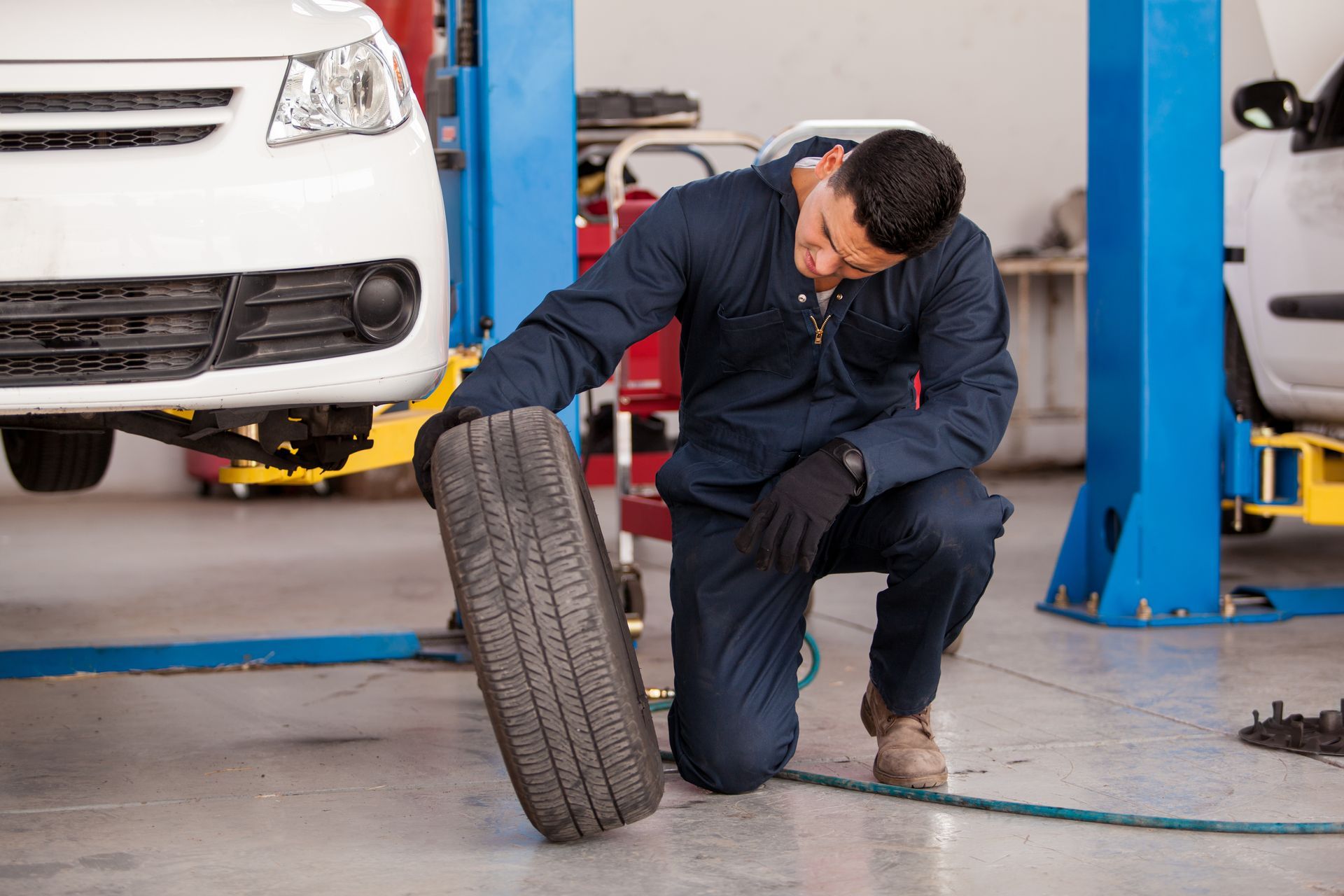
A good tire repair decision starts with removing the tire from the wheel and checking it inside and out. The outside shows the puncture location. The inside shows whether the structure and inner liner are still safe.
The wheel should be checked too. A bent rim, corroded bead area, bad valve stem, or damaged sensor seal can all cause air loss that gets blamed on the tire. If the leak is coming from somewhere other than the puncture, the repair plan changes.
Get Tire Repair In Valdosta, GA, With Fussell Tire and Service
If you have a flat tire, a slow leak, a nail in the tread, sidewall damage, or a tire that keeps losing air, Fussell Tire and Service in Valdosta, GA, can inspect the tire and explain whether repair or replacement is the safer choice.
For tire repair and replacement guidance you can trust,
contact us to schedule an appointment.